"After a difficult discussion with my partners, we've decided to move in different directions. We both wanted to make changes that didn't align, but what is important is that we remain on good terms."
That's Chef Thomas Burke, talking to Westfair Communications on the Saturday he left the restaurant he'd spent two years rebuilding. He wasn't fired from a job. He was let go from a name he'd just finished renaming.
If you've eaten at the farmhouse on Bedford-Banksville Road any time in the last four years, you already know some version of this story in pieces. You remember when it closed. You remember the seafood tower on the new menu. Maybe you never noticed it flipped back. What's harder to piece together, unless you've been tracking restaurant trade coverage since 2024, is how fast the whole cycle happened and what the reversal actually tells you about how this town treats its oldest table.
Sixty-Some Years of Being Exactly One Thing
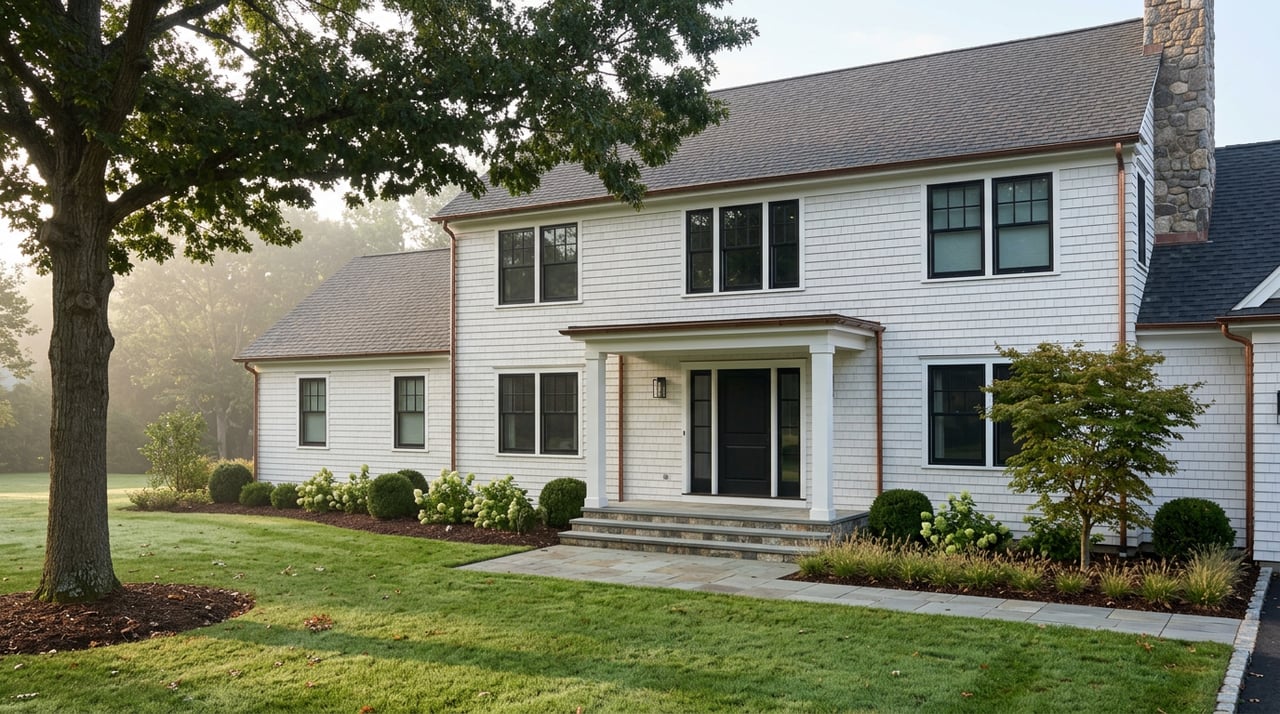
La Crémaillère occupies the Widow Brush House, built in 1750, in Bedford's Banksville section. The lineage traces back to Robert Meyzen, who came to the United States from France with the French Pavilion at the 1939-40 World's Fair and later worked on Henri Soulé's staff when he opened Le Pavillon in New York in 1941. In 1960, Meyzen and his business partner Fred Decré founded La Caravelle in Manhattan, one of the era's most decorated French dining rooms. They eventually took over La Crémaillère on Bedford-Banksville Road and made it their country outpost.
The restaurant built its reputation on a 14,000-bottle wine cellar, mural-covered walls painted by Jean Pajet depicting French provincial dress, and a clientele that reportedly included Tommy Hilfiger, Glenn Close, Tom Brokaw, and Billy Joel over the years. As recently as August 2026, OpenTable was still describing it as the area's "77-year-old French restaurant," a shorthand that puts its founding somewhere around 1949. Whatever the exact year, the identity never wavered for decades: French country cooking, jacket-optional but still formal, the kind of place where a proposal or an anniversary got planned months in advance.
COVID and a legal dispute forced a two-year closure before the restaurant reopened in 2022 under new ownership with Thomas Burke as executive chef. Burke had trained at Le Bernardin and Aureole in Manhattan, Boulevard in San Francisco, and The French Laundry in Napa Valley before landing at La Crémaillère. Under his kitchen, the restaurant earned recognition in the Michelin Guide New York two years running, starting in 2023.
That track record is what makes what happened next worth understanding.
Fourteen Months as Le Poisson
In February 2024, the restaurant closed for renovations, serving its last pre-renovation meal on Valentine's Day. When it reopened on March 15, it wasn't La Crémaillère anymore. It was Le Poisson, Burke's own concept, built around seafood: tuna carpaccio, hamachi tartare, Maine lobster, porterhouse steak, an oversized seafood tower. Burke was no longer just the chef. He was managing partner and owner of his first restaurant, with general manager Alice Burke bringing in French antiques and Normandy-inspired design touches, and a new lounge area added for walk-in guests who wanted cocktails and oysters without a reservation.
The murals stayed. Almost everything else about the concept changed.
Fourteen months later, on Saturday, July 27, 2024, Burke and his investors parted ways. The public explanation, delivered through Westfair Communications and Greenwich Free Press, was mutual and vague: differing visions, no hard feelings, Burke moving on to find a new home for the Le Poisson name. The investors' response was immediate and specific. They didn't hire a new chef and keep the seafood concept running. They reverted, in full, to La Crémaillère.
What the Investors Chose Instead of a New Concept
This is the part that's easy to miss if you only caught the headlines in 2024 and never checked back. The investors had every option available to them after Burke left. They could have kept Le Poisson running under a new executive chef. They could have tried a third concept entirely, something built for the post-COVID Bedford that Burke himself once described as full of newer Manhattan and Brooklyn transplants who didn't know the old restaurant's reputation.
Instead, they went back to the name, the format, and by most accounts the murals and menu structure that had defined the place before anyone tried to reinvent it. A review posted to Food Science Institute in October 2024, shortly after the switch back, noted simply that the current restaurant had "restored its original name, Le Cremaillere," and that regulars who'd been going since the Burke-era reopening found it, in essence, back to itself.
That choice is the actual story here, more than either individual rebrand. In a restaurant market where menu reinvention is usually treated as a growth strategy, the ownership group at this specific address concluded that the La Crémaillère name carried more value intact than any single chef's new direction could generate. It's a bet that continuity, not novelty, is the asset worth protecting on Bedford-Banksville Road. That instinct tracks with how the Town of Bedford has approached its commercial districts more broadly. The town's Doing Business page describes an ongoing Eat, Shop, Explore campaign and a part-time Bedford Promoter position, funded through the end of 2026, whose job includes helping longtime storefronts stay occupied and visible rather than pushing turnover for its own sake.
The Dining Room Tonight
If you walk in this fall, you'll find La Crémaillère operating again as a fine dining French restaurant, not a seafood house. Longtime manager Stéphane Beal returned to the front of the house that September, restoring some of the institutional memory that had briefly left with the rebrand. The dining room itself is back to its classic, mural-filled setup rather than the lighter, lounge-forward layout Le Poisson had introduced.
The menu on file was updated as recently as this past spring, which suggests the kitchen is still actively evolving under its restored identity rather than coasting on nostalgia alone. Listed hours have varied slightly across different directory sites this year, generally clustering around Wednesday through Sunday evenings with a Sunday lunch service in the early afternoon. Given how much this address has changed hands and hours over the past two years, calling ahead before a special occasion dinner is worth the extra step.
The Loose Thread: Where Burke Landed
Chef Burke didn't disappear after July 2024. The last public reporting on his plans, from Greenwich Free Press and Westfair around the time of his departure, had him searching for a new Westchester location to relaunch Le Poisson under his own ownership, separate from the Bedford-Banksville address. Nothing has surfaced publicly since to confirm whether that search turned into an opening. If you're the type of Bedford diner who tracks these things, it's a name worth watching for on Instagram or a future restaurant week roundup. If it resurfaces, it'll be somewhere else entirely, not back at the farmhouse.
For now, the farmhouse belongs to La Crémaillère again, murals and all, run by the same investors who decided that some Bedford institutions are worth more unchanged than reinvented.
If you're curious what else has shifted around town this year, from the Village Green to the restaurant strip near Katonah, our look at Bedford's late-summer Saturday routine covers some of the other moves. And if you're new to the area and want the fuller picture of what makes this stretch of Northern Westchester tick, our Bedford neighborhood guide is a good next stop.
Aurora Banaszek keeps an eye on the small stuff that makes a town feel like itself, whether that's a restaurant finding its way back to its own name or the quieter changes happening a few doors down. If you've got a Bedford story we should be tracking, or you're just looking for a dinner recommendation before your next visit, reach out.